
Commercial Asphalt Paving Cost Factors in Metro Detroit
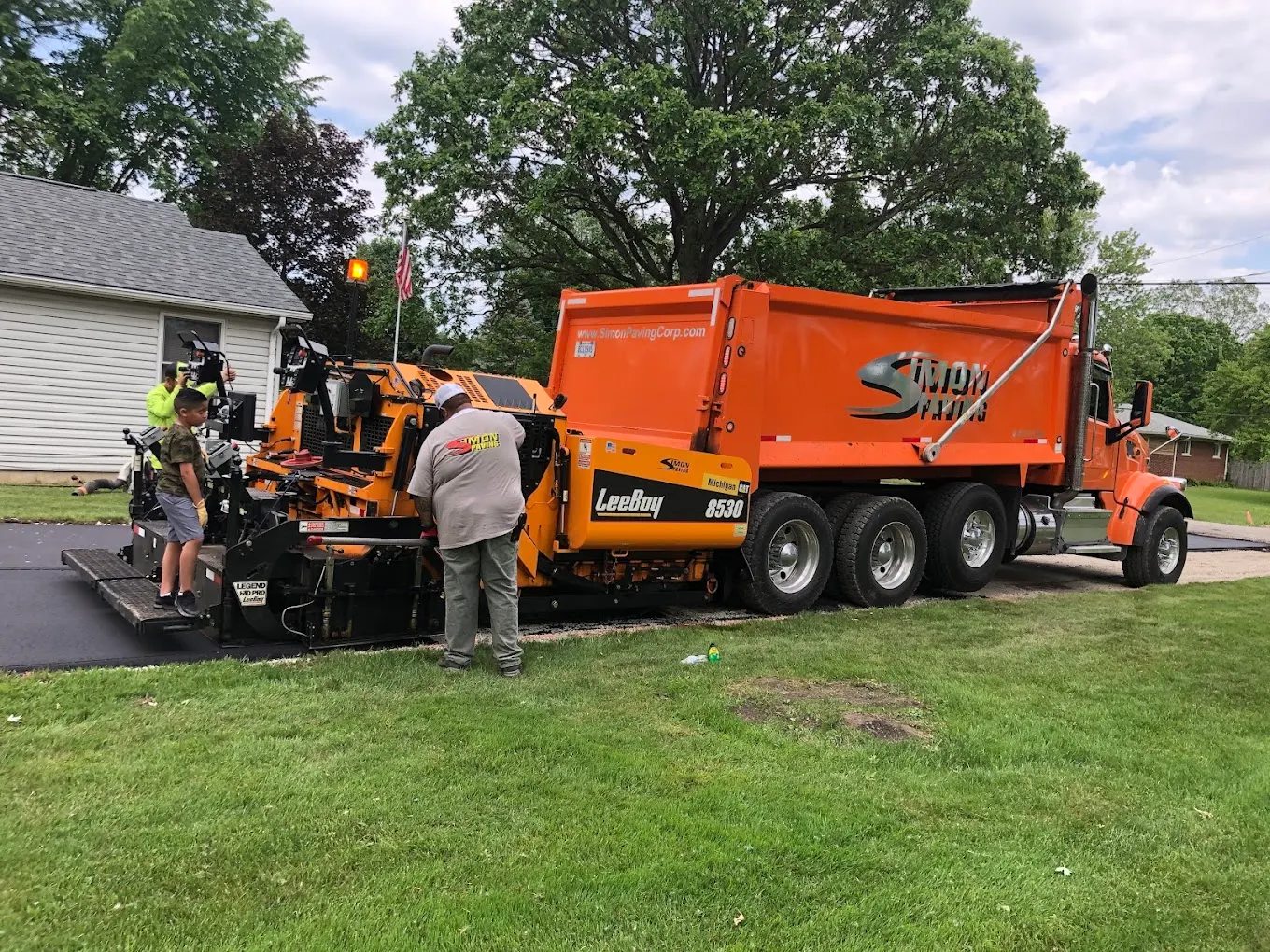
Four things drive the cost of commercial asphalt paving in Metro Detroit: the condition of the existing pavement and base, how water drains off the site, how trucks and customers move through it, and how much work the scope covers. Weather matters too, because Michigan's fall narrows the window for placing asphalt. Here is how each one shapes an estimate, so you can compare proposals on equal terms.
Existing pavement and base condition shape the prep work
Under the asphalt sits the base, a layer of compacted stone that spreads traffic loads into the ground. If it is sound, a lot can often be paved over. If it is soft or pumping water, the new surface may fail again unless the underlying problem is addressed.
Cracking, rutting and total pavement depth tell a contractor how much prep is needed. Fine surface cracks and light wear usually point to asphalt resurfacing, which puts a new layer over a suitable surface. Deep alligator cracking (a pattern that looks like reptile skin), ruts from heavy trucks, or spots that flex underfoot usually mean the old asphalt has to be removed or milled (ground off) first. Soft areas in the base may need to be dug out and rebuilt before any paving happens.
Each step adds equipment time, hauling and material, which is why two lots of the same size can end up with very different estimates. A site review can help determine which category your lot falls into.
| Condition found | Typical approach | Effect on the estimate |
|---|---|---|
| Light cracking, solid base | Crack repair and resurfacing | Less prep and less material |
| Widespread cracking, some ruts | Milling, then new asphalt | More equipment time and hauling |
| Soft or failing base areas | Dig out, rebuild base, then pave | Can substantially increase prep work |
Drainage, lot use and access affect the paving plan
Water can contribute to asphalt pavement damage. If your lot has low spots where puddles sit, or slopes that send runoff toward a building or entrance, the grading may need to change as part of the job. Fixing drainage while the lot is already torn up can save a second round of work later, and it helps protect the new pavement.
How the lot is used matters as much as how it looks. Delivery trucks, dumpster pickup and tight turning areas put far more stress on pavement than passenger cars do. Those zones may call for a thicker or stronger section than the stalls where customers park. If you want to see how that fits into a full lot project, our page on asphalt parking lot paving covers the basics.
Access shapes the plan as well. Crews need room to stage equipment and trucks, and many businesses cannot close entirely. Phasing the work so one entrance stays open, or paving half the lot at a time, takes more planning and can add time. Tell the contractor up front about business hours, deliveries and any areas that must stay usable.
Michigan fall weather can narrow the work window
Asphalt needs workable weather to be placed and compacted properly. Michigan's October and November days bring cooler temperatures, and freeze-thaw cycles (water getting into cracks, freezing and expanding, then thawing) are part of the regional climate all winter. As nights get colder, the window for paving gets shorter, and a rain delay can push a job back.
For commercial sites in Romulus, Allen Park, Taylor and Wayne, the practical point is the same: do not wait until late in the season to ask for a proposal. Scheduling early gives the work more room to land on suitable days. If your lot has pooling water or open cracks heading into winter, those problems tend to get worse after a freeze.
Ask any contractor how the schedule accounts for the forecast, what happens if weather pushes the start date, and whether some of the work could be done in spring instead. A clear answer to those three questions tells you a lot about how the job will be run. Our guide on how to maintain asphalt pavement covers pavement maintenance.
What to document before requesting an estimate
You can make an estimate faster and more accurate by gathering a few things before anyone visits your site:
- The areas you want paved, including drive lanes, stalls, loading zones and entrances.
- Visible damage such as cracks, ruts, potholes and sunken spots.
- Drainage concerns, like where water collects after a rain.
- Access limits, including business hours, delivery times, gates and low clearances.
Then ask what is included in the proposed scope. Does it cover milling or removal, base repair, crack sealing, the asphalt layer itself, and striping? A lower number that leaves out prep work often turns into change orders later. Written proposals that list each task make it easy to compare one against another.
If you want a second set of eyes on your lot, we offer a Free Estimate for commercial properties across Metro Detroit, so you know what the work involves before you decide.
Common questions
What affects commercial asphalt paving cost the most?
The amount of prep work often moves the number most. A lot that needs milling and base repair can cost considerably more to bring back than one that only needs a new surface layer, even when the square footage is the same.
Is resurfacing a commercial parking lot cheaper than full replacement?
Often it is, because resurfacing skips full removal and base rebuilding. It only works when the base is sound, so the condition of the lot decides which option makes sense.
What should a commercial asphalt paving estimate include?
It should list the areas covered, any milling or removal, base repairs, drainage or grading changes, the asphalt layer, and how the work will be scheduled around your business. If an item is not written down, ask whether it is included.
Areas we serve
Our services
Have a question about your project? Call (855) 432-7302